Global industry-leading manufacturer of high-performance, innovative solutions and components across a wide range of industries.
Serving Biopharm and Cell Therapy
Industry-leading provider of material science-based solutions in the biopharmaceutical and cell therapy markets for single-use fluid management.
Medical Components and Custom Solutions
We provide custom components and engineered systems for the medical device industry, including critical parts where precision enables superior performance.
Electronics and Semiconductor Industry Solutions
Design and manufacture a complete line of ultra-high purity, fluoropolymer-based fluid handling components and solutions for the electronics and semiconductor markets.
Industrial & Consumer Solutions (ICS)
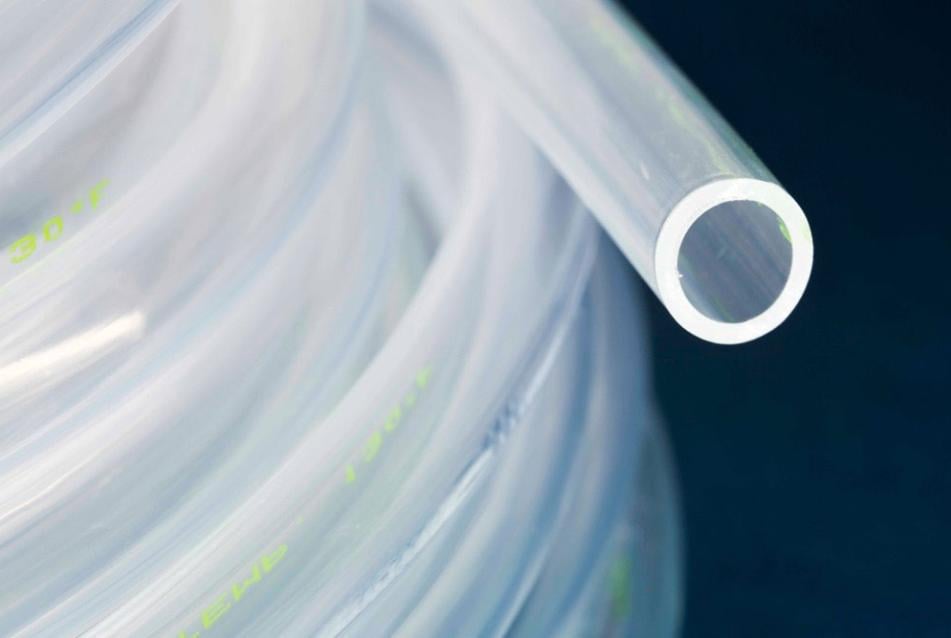
Superior engineering and customer support to achieve safety, performance, and regulatory compliance across a broad range of capabilities. Offerings include Tygon® Tubing and Accessories, Hoses and Fittings, Heat Shrink Tubing, and High-Performance Seals.
Sensors Flow Measurement Solutions
Playing an essential role in preventing cross-contamination, validating essential processes, and driving cost savings, we specialize in the development and production of high-quality single-use flow sensors and corresponding equipment.
Liquid cooling is transforming data center thermal management by delivering reliable, high‑efficiency heat removal for demanding Artificial Intelligence (AI) and High‑Performance Computing (HPC) workloads. Engineered for uptime, cleanliness, and long‑term material compatibility, Saint-Gobain's liquid cooling solutions are built to perform in the most advanced digital environments.
Integrating seamlessly with evolving architectures, we support both direct‑to‑chip (D2C/DTC) and immersion cooling approaches, ensuring exceptional performance and protection through careful material selection and robust system design.
#general-text-9466
As an OCP Bronze Member, Saint-Gobain is actively engaged in the global community shaping the future of data center cooling, giving us early visibility into emerging standards and technologies driving high density and AI-focused infrastructure. Through the OCP Cooling Environments Project, which explores liquid cooling, immersion, cold plates, door heat exchangers, and heat reuse strategies, Saint-Gobain stays aligned with proven next generation thermal practices that address rising power density and sustainability expectations.
Saint-Gobain’s participation ensures we are not just following industry direction, but are actively contributing to the standards that will guide cooling innovation now and in the future.
#why-data-centers-choose-liquid-cooling-9386
#how-does-liquid-cooling-work-10611
How Does Liquid Cooling Work?
In a liquid‑cooled data center, coolant circulates through a closed loop to remove heat from servers and transfer it to the facility’s cooling infrastructure. The loop typically includes a coolant distribution unit (CDU) connected to manifolds that route fluid to cold plates in direct-to-chip systems or to immersion cooling tanks where heat is transferred from submerged hardware to a circulating coolant loop.
Supporting components such as tubing and hoses enable routing, seals prevent leaks, and filters maintain particulate and cleanliness control. Additional elements—such as quick disconnects, sensors, degassing features, and fluid service points—can be incorporated to enhance performance and serviceability.
#saint-gobains-key-performance-requirements-9316
Saint-Gobain's Key Performance Requirements
Chemical Resistance & Material Compatibility
Resist swelling, extraction, cracking, and stress effects across coolant chemistries (including additives/inhibitors).
Long Product Lifetime & Durability
Maintain properties under heat, pressure pulsation, vibration, and continuous exposure.


 As an OCP Bronze Member, Saint-Gobain is actively engaged in the global community shaping the future of data center cooling, giving us early visibility into emerging standards and technologies driving high density and AI-focused infrastructure. Through the OCP Cooling Environments Project, which explores liquid cooling, immersion, cold plates, door heat exchangers, and heat reuse strategies, Saint-Gobain stays aligned with proven next generation thermal practices that address rising power density and sustainability expectations.