


- What is Heat Shrink Tubing?
- How Does Heat Shrink Tubing Work?
- PTFE and FEP Heat Shrink Materials
- Recovery Temperature vs. Service Temperature
- Typical Applications for PTFE and FEP Heat Shrink



Heat shrink tubing plays a critical role in protecting components exposed to harsh environments. From safeguarding sensors to insulating wires in industrial systems, PTFE and FEP heat shrink provide durable, chemical-resistant solutions where performance matters.
This article explains what heat shrink is, how PTFE and FEP materials are used, the importance of shrink ratios, and how to properly measure heat shrink tubing for your application.
What is Heat Shrink Tubing?
Heat shrink tubing is a polymer-based sleeve designed to reduce in diameter when heat is applied. Once heated, the tubing conforms tightly around the underlying component, creating a protective barrier that improves durability, consistency, and service life.
In industrial and process-driven environments, heat shrink is commonly used to protect sensors, wires, and small assemblies from abrasion, moisture, chemicals, and temperature extremes. Rather than functioning as a structural element, heat shrink acts as a protective layer that enhances system reliability without adding significant bulk or weight.
PTFE and FEP heat shrink tubing are especially valued for demanding applications requiring high cleanliness, chemical resistance, and thermal stability, as fluoropolymers uniquely provide this combination of properties.
How Does Heat Shrink Tubing Work?
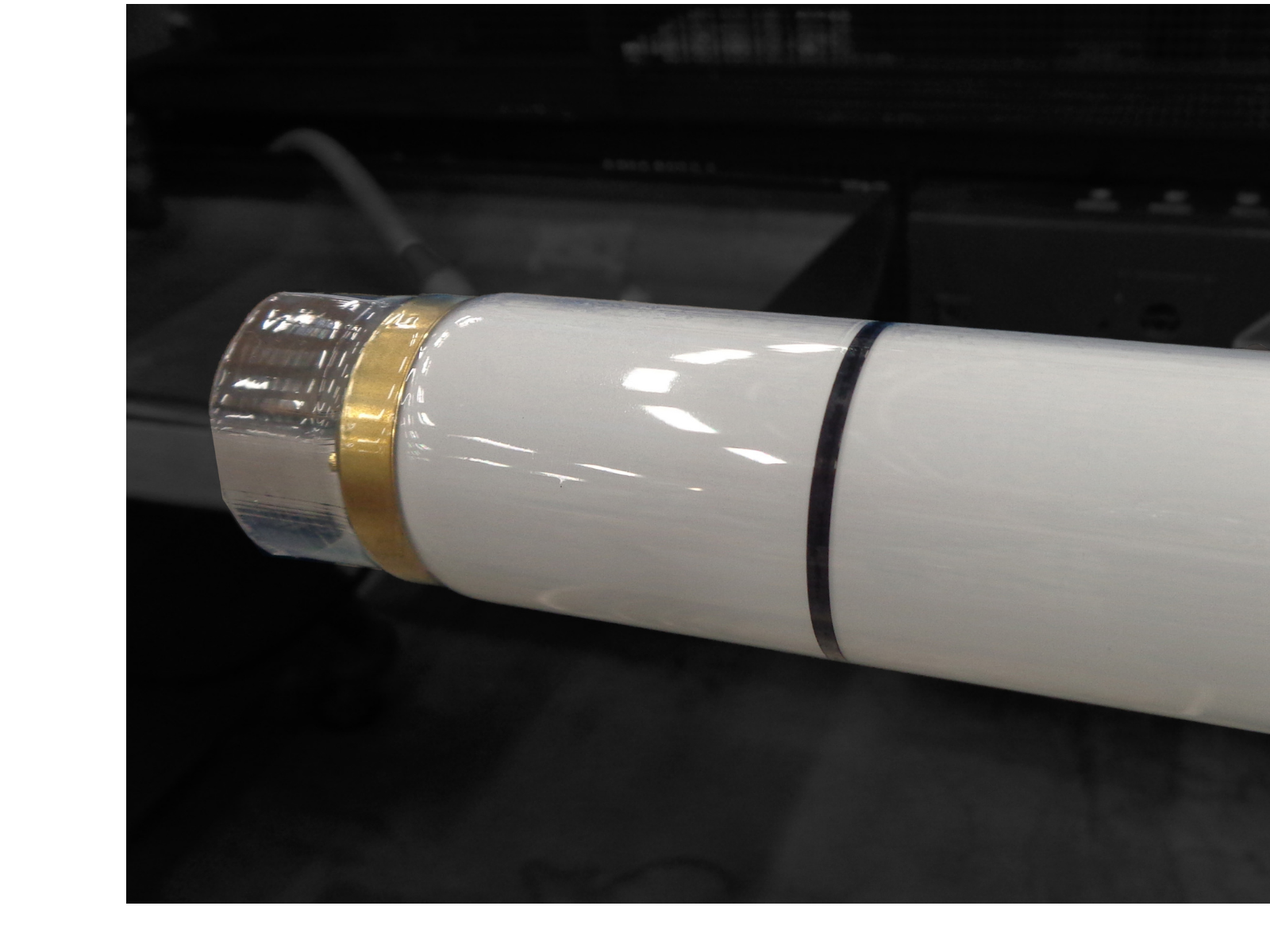 Heat shrink tubing relies on a polymer that is engineered to “remember” a smaller diameter and return to that shape when heated. When reheated during installation, the polymer chains regain mobility and the stored recovery forces drive the tube back toward its original dimensions, producing a tight, conformal jacket around the component.
In practical terms, this shape-memory behavior is what allows heat shrink to deliver uniform circumferential compression, improved environmental sealing, and consistent encapsulation without adding significant part complexity. Recovery is driven by polymer physics and processing history (orientation, crystallinity, and crosslink density where applicable).
PTFE and FEP Heat Shrink Materials
Not all heat shrink materials perform the same. PTFE and FEP stand out for applications that involve extreme temperatures, aggressive chemicals, and mechanical stress.
PTFE heat shrink offers excellent resistance to virtually all industrial chemicals and maintains performance over a wide temperature range. It also provides a smooth, low-friction surface that helps prevent buildup and makes cleaning easier. Because PTFE is semi-rigid, it is well suited for sensor protection and demanding wire insulation scenarios.
FEP heat shrink provides similar chemical resistance while offering greater clarity and a slightly more flexible feel. This makes FEP a strong choice when visual inspection of the underlying component is beneficial or when tighter bending radii are required.
Both materials are commonly used in industries such as the following, where reliability and material integrity are often more important than cost alone.
Recovery Temperature vs. Service Temperature
A key engineering concept is the difference between recovery (shrink) temperature and maximum recommended operating/service temperature. Recovery temperature is the heat required to activate shrink and achieve a stable recovered geometry; service temperature is the temperature the tubing can withstand over time without unacceptable creep, loss of properties, or dimensional drift. For example, Saint‑Gobain's FEP heat shrink tubing is specified with working temperature up to +200 °C and a shrink temperature of >215 °C, which makes it well suited for high-temperature sensor encapsulation and chemically aggressive environments where a relatively lower recovery temperature is desired.
By contrast, Saint‑Gobain's PTFE heat shrink tubing supports extreme temperature resistance up to 260 °C and is available in 2:1 and 4:1 shrink ratios, but it typically requires a higher shrink temperature (e.g., >320 °C) due to PTFE’s processing characteristics. This is why PTFE heat shrink is often selected when thermal margin and chemical inertness are paramount, while FEP heat shrink is frequently preferred when a lower recovery temperature and higher clarity are beneficial.
Typical Applications for PTFE and FEP Heat Shrink
PTFE and FEP heat shrink are frequently selected for applications that require long-term protection under challenging conditions.
Common uses include sensor encapsulation to shield probes from corrosive fluids, abrasion, and thermal cycling. Heat shrink can also be used to insulate and protect wires routed through high temperature zones, washdown areas, or chemically aggressive spaces.
Additional benefits include improved strain relief, smoother transitions between components, and added mechanical protection without compromising flexibility or accuracy.
Because these materials are non-reactive and stable, they help reduce maintenance and downtime while extending component lifespan.
Understanding Heat Shrink Ratios
One of the most important specifications when selecting heat shrink tubing is the shrink ratio. The shrink ratio describes how much the tubing will reduce from its supplied diameter to its fully recovered diameter.
A 1.6:1 shrink ratio indicates that the expanded diameter is 1.6 times the recovered diameter, corresponding to a final diameter of about 62.5% of the original. A 1.6:1 shrink ratio offers several advantages, especially when working with components that have predictable diameters and do not require large size transitions, as it provides a secure, professional finish while minimizing excess material and distortion.

Dual Layer Heat Shrink Tubing
In addition, dual layer heat shrink tubing architectures developed by Saint‑Gobain further extend functionality by integrating multiple material properties into a single construction. These systems typically consist of a fluoropolymer outer layer (PTFE or FEP) that provides thermal resistance, chemical durability, and dimensional stability, combined with an inner layer designed to soften, melt, and flow during heating. Upon recovery, the inner layer enables tight conformability and intimate encapsulation of the underlying substrate, minimizing voids and ensuring uniform contact. This behavior is particularly advantageous in applications such as catheter reflow, composite consolidation, and complex geometry coverage, where both precise surface replication and reliable encapsulation are critical.
How to Measure Heat Shrink Tubing Correctly
Accurate measurement is essential to ensure proper fit and performance. Measuring heat shrink tubing involves two key dimensions: expanded inside diameter and recovered inside diameter.
- Start by measuring the largest diameter of the component before installation. This measurement determines the minimum expanded size the tubing must accommodate. The tubing’s expanded inside diameter should be slightly larger than the component to allow for easy installation without forcing.
- Next, consider the recovered inside diameter. After shrinking, the tubing must be small enough to grip the component securely. This ensures consistent coverage and prevents gaps that could allow contaminants to enter.
Wall thickness is another important factor. Thicker walls generally provide greater protection but may reduce flexibility. Balance durability requirements with space constraints when selecting tubing.
Length should also be measured with care. Heat shrink may shorten slightly during recovery, so allowing a small amount of extra length helps ensure full coverage after installation.
As heat shrink tubing recovers down onto a substrate, the wall thickness generally increases because the same material volume redistributes over a smaller circumference. In addition, many applications intentionally use partial recovery (not fully shrinking to the smallest possible ID), which can yield a thinner, more flexible final wall than the “fully recovered” value listed on a datasheet. Understanding this relationship between recovered ID and wall thickness helps prevent over-design (selecting tubing that becomes too thick or stiff after recovery) and improves first-pass success in prototyping and production.
Installation and Performance Considerations
Proper installation helps maximize the benefits of PTFE and FEP heat shrink. Even high-performance materials can underperform if recovery is poorly controlled. The most common installation-related failure modes include incomplete recovery from insufficient heat input, local overheating that can distort the tubing or create uneven recovery, and non-uniform heating that leaves wrinkles, trapped voids, or inconsistent wall thickness.
Using the correct heat source and following recommended temperature ranges helps prevent discoloration, distortion, or incomplete recovery. Once installed, properly selected heat shrink should maintain its protective properties throughout repeated thermal cycles and environmental exposure.
Choosing the correct material and shrink ratio up front reduces installation issues and improves long-term reliability. Another practical consideration is longitudinal shrink (length change) during recovery. Industry guidance commonly notes that heat shrink can lose length during recovery and recommends planning for this in cut length selection; some references cite longitudinal shrinkage on the order of ~5% to ~15% depending on the material. Including a small length allowance helps ensure full post-recovery coverage of the target area.
Conclusion
PTFE and FEP heat shrink tubing provide dependable protection for sensors and wire insulation in demanding industrial environments. Understanding what heat shrink is, how materials behave, and how shrink ratios impact performance allows for better material selection and more reliable results.
By measuring components carefully and selecting tubing that balances fit, protection, and durability, heat shrink becomes a simple yet powerful solution for extending equipment life and maintaining consistent performance.


